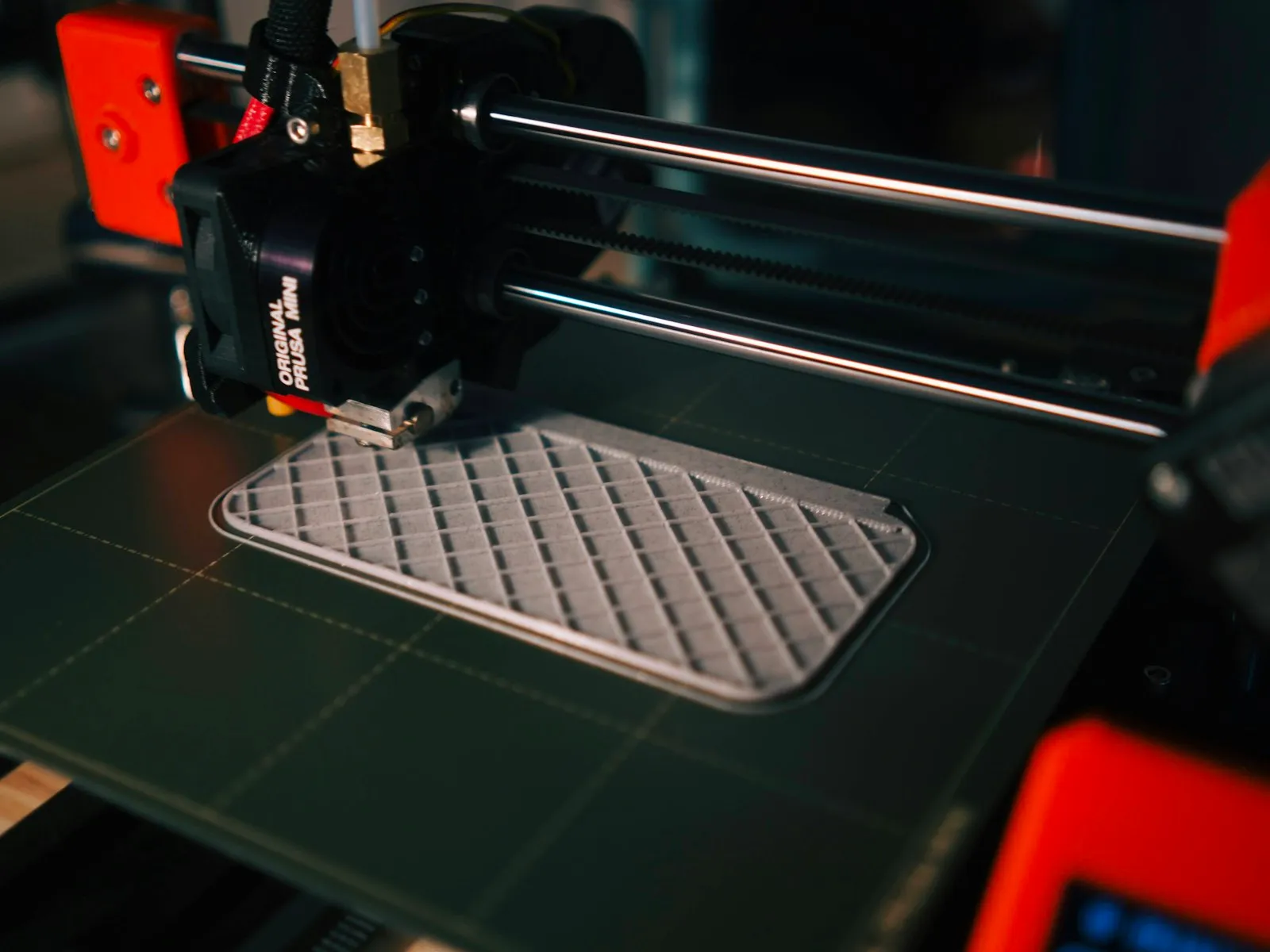
- Nozzle · temperature · 255 °C
- Fixture batch · Part 3 of 12
Additive manufacturing for parts that have to work
We print functional parts, fixtures, enclosures and prototypes in the right material for each job. We do not compete on price per part: we compete on the part doing its job.
We check every file before printing and tell you if something will not hold up
What we do
Additive manufacturing in the service of industry, not as an end in itself.
- Functional parts
- Brackets, guides, ducts, low-load gears and spares in engineering materials.
- Production fixtures
- Templates, grippers, locators and gauges made for your part and your process.
- Prototypes
- To validate form, fit and function in days, before ordering moulds or machining.
- Enclosures
- Housings for the electronics we develop and for client equipment.
- Short runs
- Tens or hundreds of units with no tooling cost.
- Design for additive
- We redesign the part to take advantage of the process: less material, fewer parts and more strength where it matters.
When printing pays off
3D printing wins in a few very specific cases. In those, it wins clearly.
Tell us what you see in your plantLow quantities
With no mould or tooling, cost per part barely depends on quantity.
Complex geometry
Internal channels, organic shapes or assemblies that used to be several parts.
Short lead times
From frozen design to part in hand in days, not weeks.
Fixtures that change
When the part changes, the fixture is redesigned and printed again.
When we advise against printing
3D printing does not replace CNC machining, casting or injection moulding when mechanical, thermal or volume requirements call for them. If that is your case, we say so and point you to the right process.
We print it
- Prototypes and validation
- Jigs and assembly fixtures
- Functional parts in engineering materials
- Enclosures for electronics
- Short runs
Better with another process
- Parts under high or cyclic loads
- High operating temperatures
- Large runs (injection moulding)
- Precision machining tolerances
- Certified parts for regulated uses
Frequently asked questions
Another question? Write to usWhich materials do you use?
It depends on the use: from engineering plastics with good mechanical and thermal resistance to flexible or fibre-reinforced materials. We recommend a material based on load, temperature, chemical exposure and the service life you need.
Can you print a file I already have?
Yes, but we review it first: many parts designed for machining or moulding need changes to print well and hold up. If something will not work, we tell you before making it.
How long does a part take?
It depends on size, material and quantity. A simple prototype is usually ready within a few days of the design being frozen; runs and engineering materials take longer.
Do you ship?
Yes. Parts can be shipped to any country. The proposal lists manufacturing time and shipping time separately.
Other divisions
- 01
Industrial Automation
PLC, control, industrial IoT, monitoring and Industry 4.0.
Control, sensors and connectivity for machines that still run but tell you nothing.
Learn more - 02
Mechanical Design
CAD, machine design, jigs, fixtures and prototypes.
Compact machines, jigs and prototypes, from first sketch to manufacturing drawing.
Learn more - 04
Electronics & Products
PCB, in-house hardware, controllers and machines developed internally.
Boards, controllers and in-house equipment for problems that keep coming back.
Learn more
Which machine or process do you want to improve?
The first conversation is free. You get a concrete assessment back, not a brochure.